[Note: This essay was first published in the late great naturezine Woolgathering in 2018.]
It was June or maybe even July of last year when my mother gave me a fan. It was a box fan, the kind you can wedge into an open window. Summer had barely arrived in Seattle. It had rained all winter and long into the spring, and until recently I’d had to waterproof myself from head to toe on my bike rides to work. But then came of a week of hot, clear weather, and the luxurious mats of moss in the park across the street finally dried out and turned brittle and caramel-colored. After a cloudless day, the upstairs bedrooms in my hundred-year-old house held the heat like EZ-bake ovens. My two little boys and my husband and I had tossed and turned in the hot stale air all night, then all week, before my mother solved the problem for us. As I plugged in her gift, as I felt that familiar hum under my fingers, I felt like an idiot for not thinking of it sooner.
I’d been away from home too long. I had actually forgotten about fans.
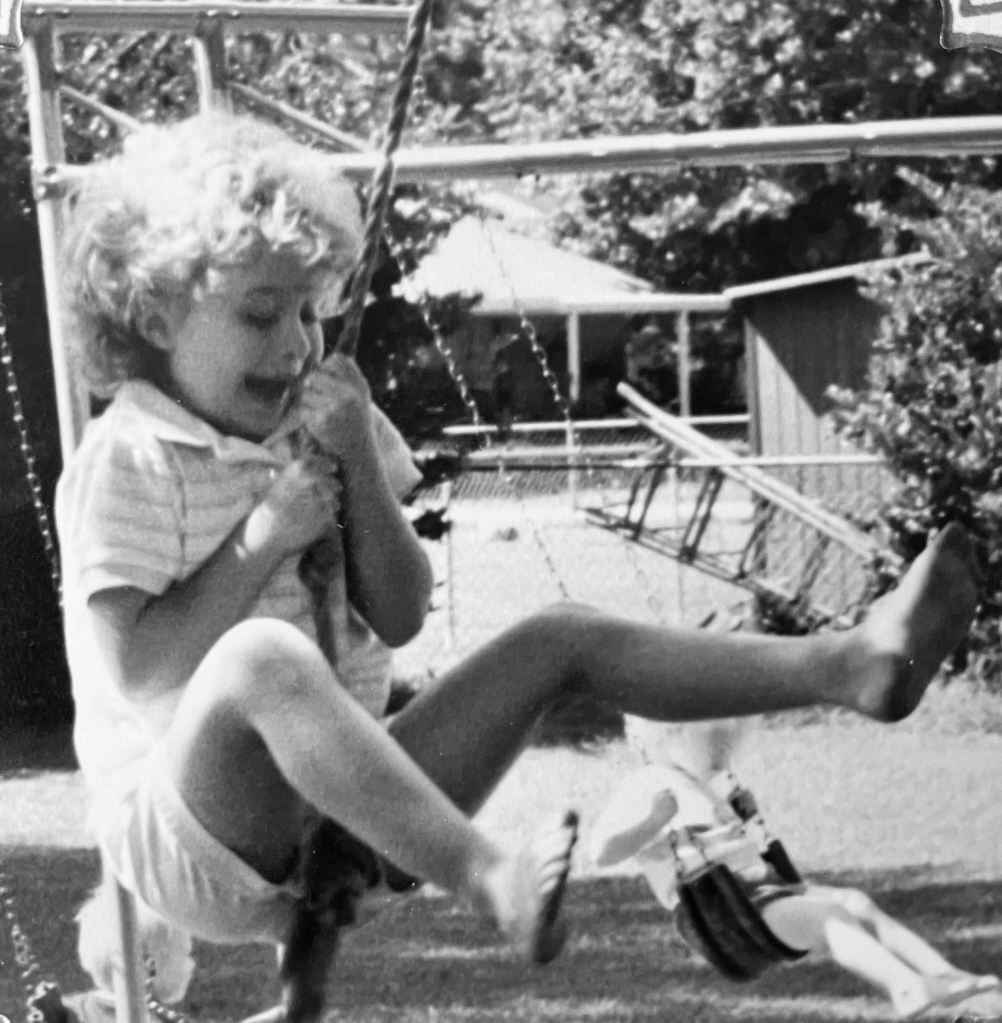
I grew up not in Seattle but in the high desert of eastern Washington. In the summer we hoped for temperatures in the eighties, expected the nineties, tolerated the hundreds for a week or two in late August. The sun baked the hop vines in the fields and stirred up the sharp smell of brewing beer all through downtown where the warehouses were. All day my five siblings and I splashed water on the backs of our necks. We played cards in the thick-cement-walled basement. It was my chore to go out to the yard and move the hose from one dry patch of grass to the next every twenty minutes. Sometimes we jumped through the sprinkler, but the water was irrigation runoff reclaimed from the fields around town, and it was full of pesticides. We couldn’t drink it. We probably shouldn’t have gotten it on our skin, either, now that I think about it. In any case, we drove my mother crazy, flopping on the linoleum floor in the kitchen, begging to be taken to the pool or the air-conditioned library, standing in front of the open freezer with our faces thrust forward into the cold.
All day we wilted. Eventually, finally, around 7pm—maybe 8 in high summer—we could feel it: the scorch of the day receding. Shadows lengthened. At first you thought the air might be getting a little cooler, flowing a bit faster. Then after a little while you were sure of it. Animals and tree limbs started to move again. Our shaggy black dog lifted her head and brought a ball to the door. We kids peeled ourselves off the linoleum and took our noses out of the freezer, and out we went into the summer evening. We stayed outside until the last bit of light disappeared from the sky, which happens late this far north. There were front yard games of Pickle, Kick-the-Can, and something we called “The Car Game,” which involved diving, in as acrobatic a way as one could manage, behind a bush in the yard whenever a car drove by. When the stars were sharp in a black sky we went in, reluctantly, back into the stale heat that had gathered in the house all day. But in each of our bedrooms was a fan, rotating from bed to bed on its stalk, to bring a bit of that evening coolness inside.
***
After college I volunteered for a while in El Paso, Texas, another high desert where the summers bleach you dry. I lived in a big brick oven of a house. Each volunteer had her own bedroom, but they were tiny and some were windowless and at night they could be nearly unbearable. There was a high-ceilinged room at the narrow back of the house that had a cement floor and two screen doors, one on either side, so that a breeze could blow through. I often came downstairs in the early morning to find two or three volunteers sleeping in here, their bodies in the line between the doorways to catch the breeze, their cheeks pressed directly against the cool cement floor. Other volunteers would take a cold shower in their pajamas at night and go to bed soaking wet. They’d wake up bone-dry before the night was half over.
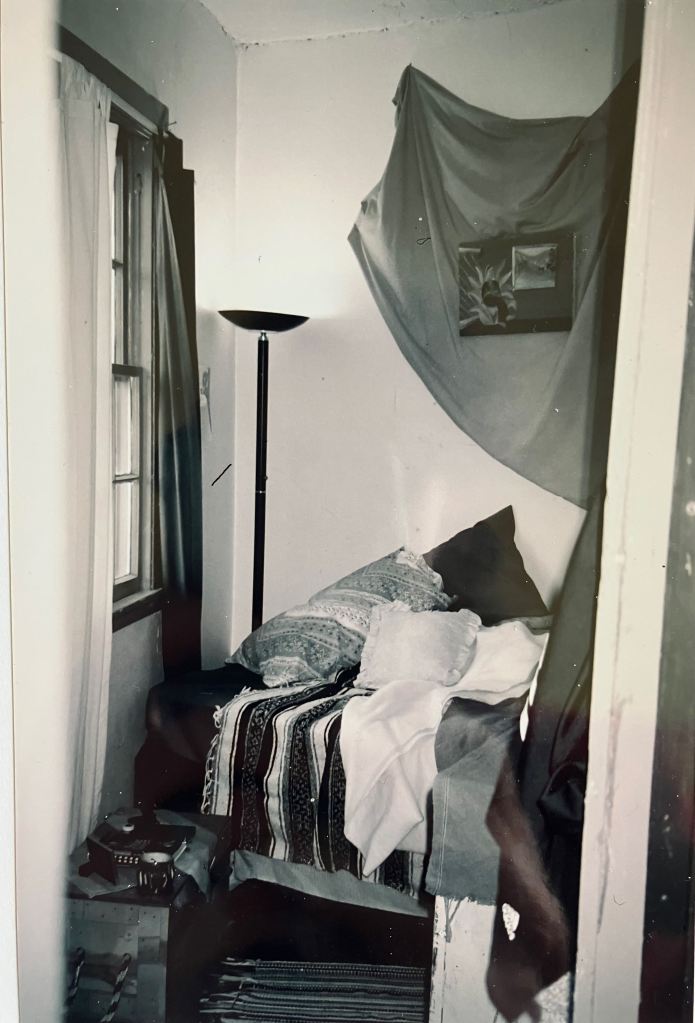
My dark secret during this time was that my bedroom was cool and lovely at night. It was upstairs, in a corner of the building that got the full smack of the sun all day and I couldn’t go inside for more than a few minutes after 8am. But the room had two windows. In the evening, after sunset, I’d set a box fan in one window, blowing out. This would suck night air through the second window, the one right over my bed, and I would fall asleep breathing the cool sweet air, laced with dust from the Franklin Mountains.
***
Then I moved to San Francisco. Carl Sandburg famously embodied that city’s fog, describing it coming in on little cat feet and then moving on. What Carl’s lovely little poem does not say is that the fog moves on for about two hours right around lunchtime; then it comes back and flops its fat fuzzy belly right down on the book you were so looking forward to reading. When people came to visit me in San Francisco from out of state I’d warn them: “You’re coming to California, so you think it will be warm and sunny. It is not. Wear pants. Bring a coat.” Most of them didn’t listen to me. They simply couldn’t believe it. I always brought extra layers to share when we made the requisite pilgrimage to the wind-whipped Golden Gate Bridge.
In the decade that I lived in the Bay Area, I forgot about summer evenings. They didn’t exist for me. Almost never did I eat dinner outside on a patio, or sit on the front steps with my husband as the sun went down. I never had that relief that comes in the coolness after a scorching day, that feeling of the world breathing out. My oldest son was born in San Francisco. I never put him to sleep in anything less than footie pajamas, zipped to the neck.
***
Everything’s different now. Laying my younger child down in his crib in a cotton onesie, I can’t help but squeeze his chubby bare legs with delight and a bit of wonder. Summer. I turn on the fan in his window. Suddenly the room is cooler, connected to the evening outside, filling with the smells of lilac and cut grass and a low murmur like the sea.
 Mary Fontana ~ Author
Leave a comment