I’m composing these words on the plane home from El Paso, TX, where I spent the weekend at Annunciation House. (If you’re signed up for my newsletter you’ve probably at least heard of the place: it’s a volunteer-run organization that provides hospitality for migrants and refugees, and the subject of my first book.)

Things are pretty quiet at Annunciation House these days. Most of the guests there are long-time US residents from across the country who were detained in enforcement operations. After being detained, many folks get transferred to El Paso because of the extensive ICE infrastructure there. Then, some are released—because they pay a bond or successfully file for habeas corpus or an immigration judge decides they should never been detained in the first place. They stay at Annunciation House while figuring out their next steps. In the first half of 2026, the house received over 500 such guests, representing over 60 different countries of origin.
On the plane home, I think back to the story club I participated in this summer with my two school-aged kids. We learned about the classic story arc called the Hero’s Journey. It goes like this: the protagonist is called away from ordinary life to an adventure; goes through trials and transformations; faces an ultimate test; triumphs and finally returns home, forever changed. (Our panel of kid critics noted that the Hero’s Journey has historically had a limited imagination with regard to gender; a parallel Heroine’s Journey, proposed by Maureen Murdock, provides a thought-provoking expansion of the monomyth.)
Back to El Paso: I spent Sunday afternoon shooting the breeze in ninety-degree shade with a young man I’ll call Orlando. Unlike most of the recent guests, he knew next to nothing about life in the US. He had come here only recently from Guatemala, alone. After crossing the border he spent two months in an immigration detention center for unaccompanied minors. (“Sixty days” is how he put it; I imagined him marking off each one as it slowly passed.)
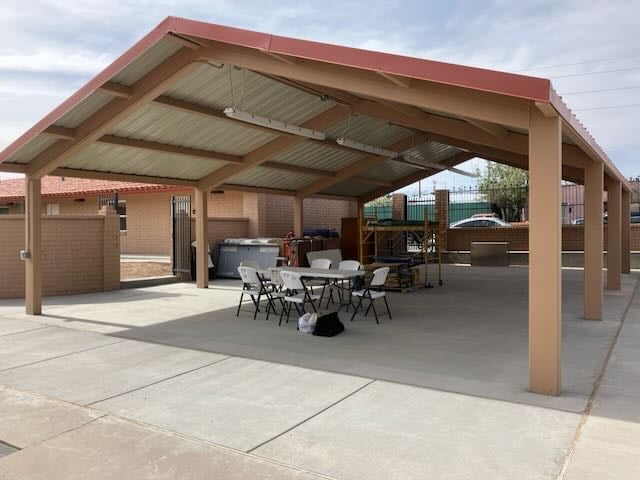
When detained minors like Orlando turn eighteen, they “age out” and can no longer be held in juvenile facilities. At that point they’re often released. I don’t know why they aren’t transferred to adult detention centers instead, but I’m grateful; it feels like a small mercy in a system that otherwise skews as punitive as humanly possible.
Thus, on Orlando’s eighteenth birthday, immigration officials brought him to Annunciation House and asked the volunteers to take him in. He had temporary permission to travel within the country, and a couple of older brothers already living in the Midwest. They sent him a new phone and a bus ticket. Late Sunday afternoon, Orlando would set off on a Greyhound to join them.
I knew he was eighteen—just— but Orlando looked so young to me, barely older than my preteen son. Despite the heat he wore a fleece zipped up to the neck. He spoke fluent Quiché and Spanish but no English. He told me the bus trip, the final leg of his nearly three-thousand-mile journey, would last forty-one hours and involve five transfers.
Well, he’d made it this far.
Orlando asked for help setting up his cell phone; he’d never had one before. We installed WhatsApp so he could talk to his brothers. Then a translation app to facilitate communications along the way.
Oh, and he wanted TikTok.
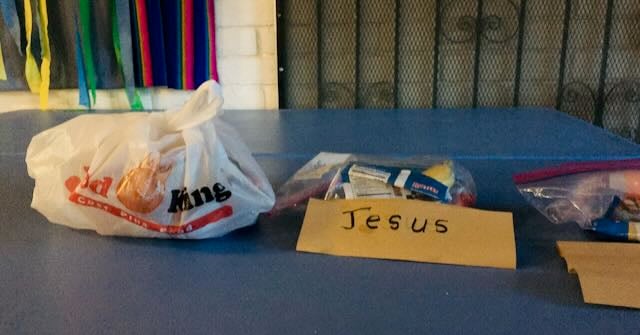
Orlando struck me as a quiet kid, neither fearful about the road ahead nor particularly confident. When it was time to go, he solemnly shook my hand. A volunteer took him off to the bus station, laden only with phone and charger and a bag of snacks.
As part of our summer story club, my children interviewed elder family members about a time they went on a Hero(ine)’s Journey. One grandparent told her story of moving to a foreign country—this country—along with a few of the trials and triumphs she encountered along the way.
I wonder if someday Orlando will tell his grandchildren about his own Hero’s Journey: the rumble of the trains across Mexico, the chill of juvenile detention, the two-day bus ride into a new life.
And everything that comes after.

Book News (& other writing)
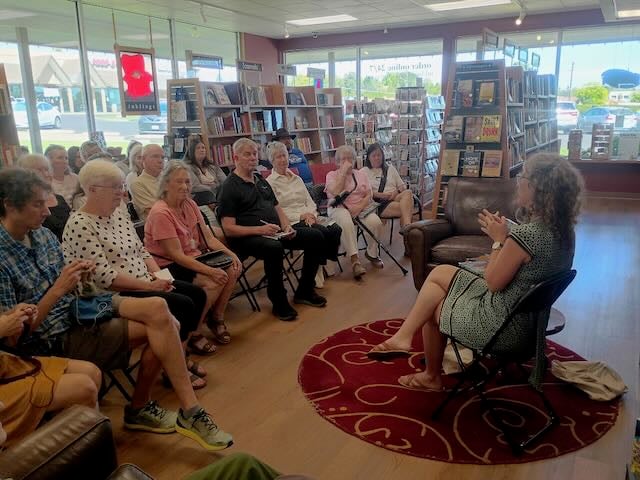
This summer I had the pleasure of talking about my book at a couple of gatherings: one in Hanover, New Hampshire and another at the delightful Inklings Bookshop in my hometown of Yakima, Washington. I can’t think of many things more heartwarming than sharing my published writing with my former English teachers. My high school friend Chris, who now works at Inklings, even reviewed my book for the Yakima Herald. (I wrote a monthly column for that newspaper my senior year of high school, which is why they had a photo of me from 1999 to run with the review.)
Since my last newsletter I’ve also appeared on a couple more podcasts, including a lively episode of “This Is Not Church”—click here to listen. (Football is only discussed for the first few minutes, which may be a good or a bad thing depending on your tastes.)
I published this opinion piece in the National Catholic Reporter, articulating why it makes good moral and economic sense to create a path to citizenship for undocumented people currently living in the US.
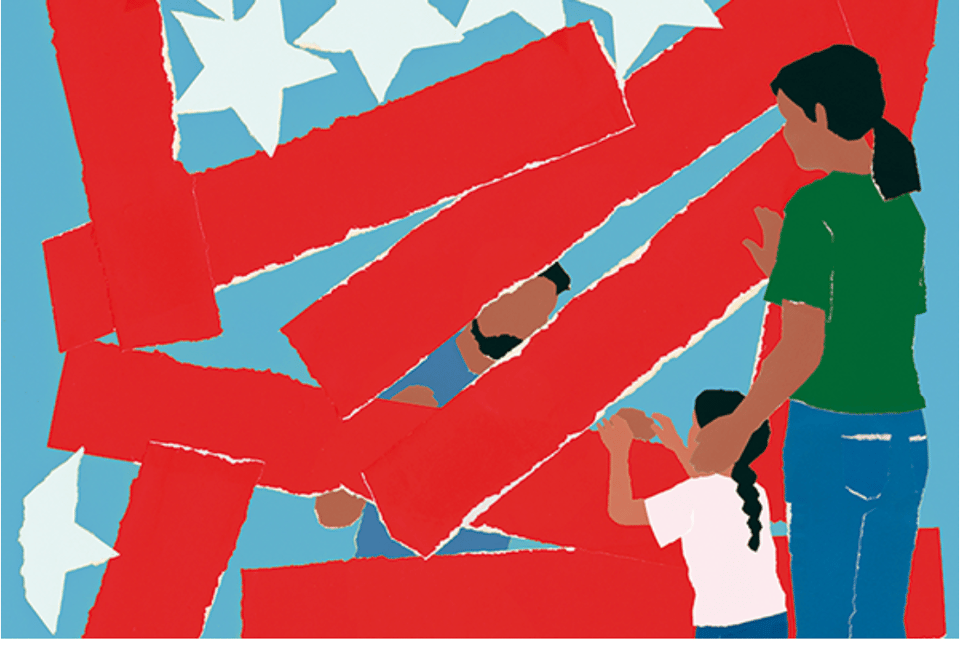
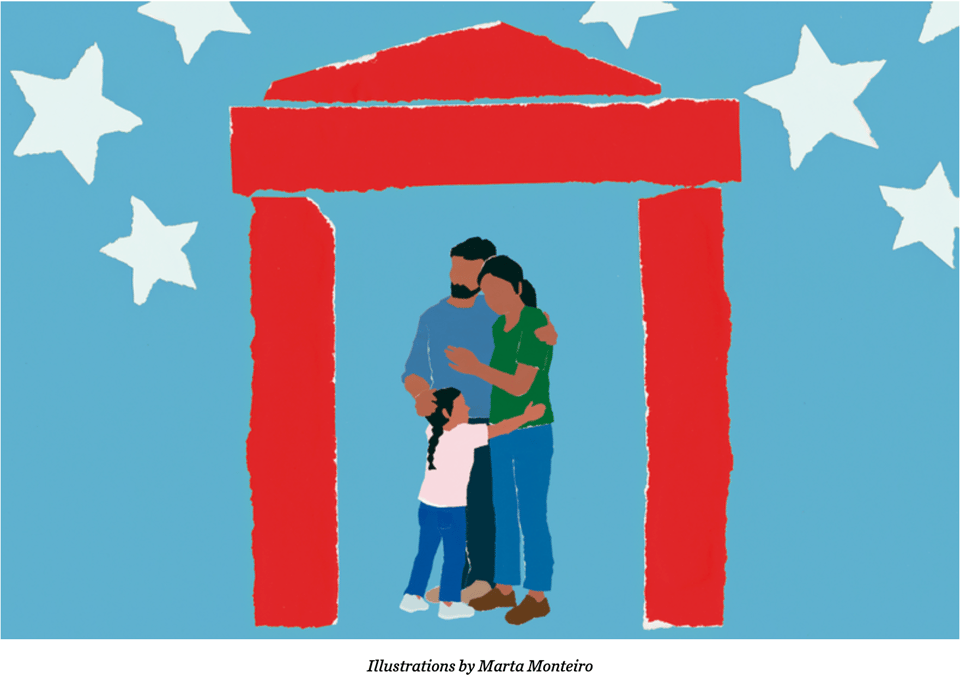
And I wrote a piece for Sojourners that traces the escalation of immigration enforcement over the decades, and explains why it’s been such a colossal failure. This gift link expires after Friday, so if you want to read the article, don’t sleep on it! I especially loved the illustrations Sojo commissioned for this essay, by collage artist Marta Monteiro:
In the next few months I’ll be speaking at a Seattle social justice series, attending an immigration summit, and meeting virtually with a group of volunteers in the Northeast who have organized to support newly settled refugees in their community. I also just signed fourteen books (!) for a family member’s book club. I’m grateful for just about any opportunity to share my writing and educate people about a cause that I care about. If you ever want me to speak to your activist network, your classroom, or your knitting circle, reach out!
Autumnally yours,
Mary


Leave a Reply